
Collection: Jewelry Display Props

Jewelry Display Props for Counters and Windows
Display props are the cheapest way to change how a shop feels. Cabinets and lighting cost thousands; a set of risers, busts and ramps costs a fraction and can be swapped for a season, a promotion or a single window.
-
Grey Microfiber Jewelry Display Set for Retail Shops — Necklace & Earring Holders
29 sizes · grey · In stockRegular price From $5.00 USDRegular priceUnit price per -
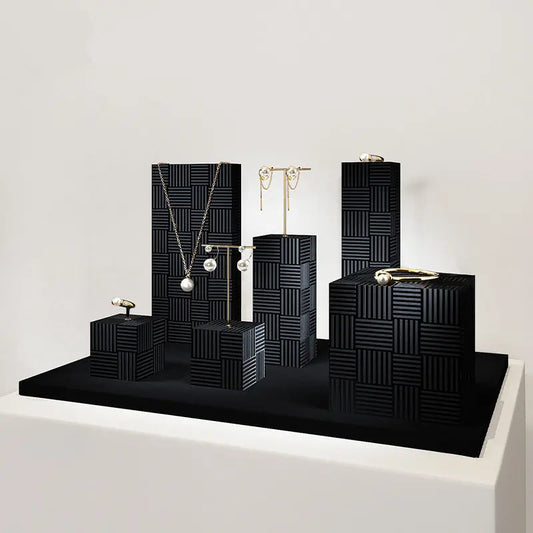
Light Luxury Jewelry Display for Shops — Microfiber Ring & Necklace Set
7 sizes · black · In stockRegular price From $21.00 USDRegular priceUnit price per -
T-Shape Earring Display Stand for Retail Store Display — Shiny Gold & Silver Holder
3 colours · In stockRegular price $8.00 USDRegular priceUnit price per -
Window Jewelry Display Rack — Card Earring & Ring Holder Set
13 sizes · black · In stockRegular price From $10.00 USDRegular priceUnit price per -
Grey Window Display Props for Retail Shops — Ring Holder & Setting Showcase
14 sizes · dark grey · In stockRegular price From $10.00 USDRegular priceUnit price per -
Tall Necklace Display Shelf for Retailers — Arched Model Showcase Set
19 sizes · 2 colours · In stockRegular price From $8.00 USDRegular priceUnit price per -
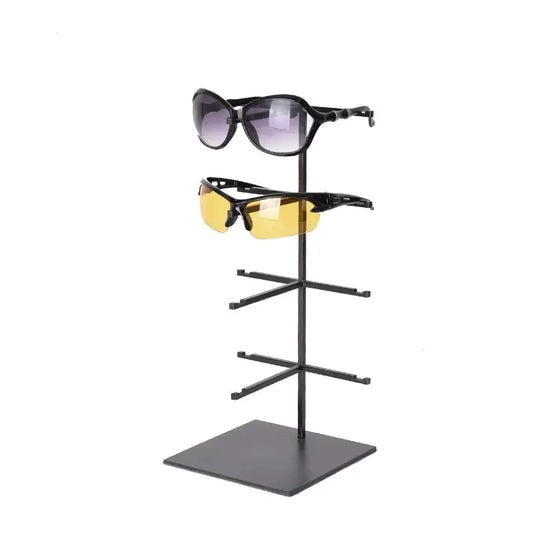
Stainless Steel Glasses Display Rack for Optical Shop Counter — Multi-Layer Eyewear Stand
4 sizes · 3 colours · In stockRegular price From $21.00 USDRegular priceUnit price per -
Bracelet Display Rack for Retail Store Display — Ring & Beaded Jewelry Holder Set
7 sizes · grey · In stockRegular price From $7.00 USDRegular priceUnit price per -
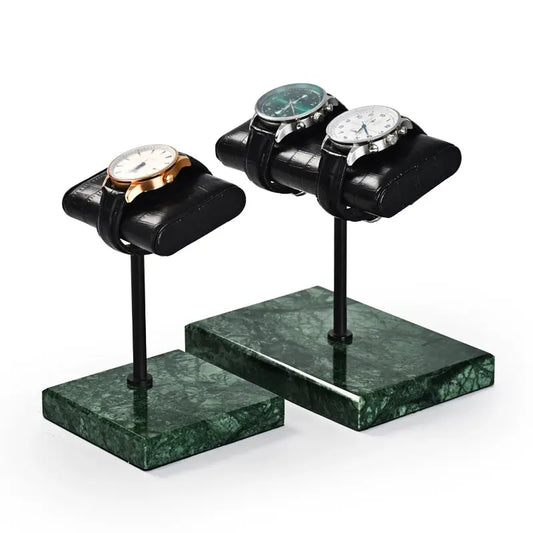
Marble Watch Display Stand for Retailers — High-End Single Watch Pedestal
2 sizes · 3 colours · In stockRegular price From $34.00 USDRegular priceUnit price per -
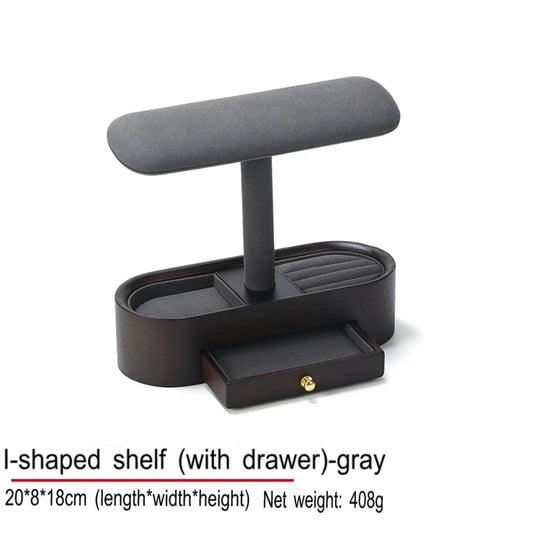
I-Frame Jewelry Display for Watch Shop Counter — Grey Microfiber Watch & Bracelet Stand
2 sizes · 2 colours · In stockRegular price From $27.00 USDRegular priceUnit price per -
Pink Window Display Props for Retail Store Display — Bracelet & Earring Holder Set
20 sizes · pink · In stockRegular price From $30.00 USDRegular priceUnit price per -
Coffee Velvet Jewelry Tray for Retailers — Small Ring & Chain Display Plates
3 sizes · coffee · In stockRegular price From $7.00 USDRegular priceUnit price per








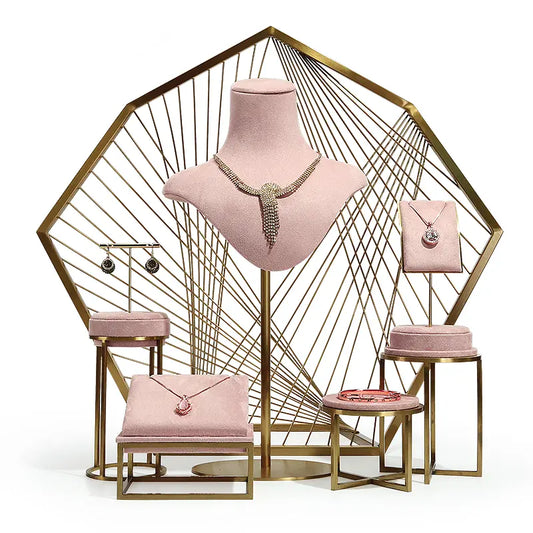


What a working prop set covers
- Height — risers and ramps so a flat tray becomes three readable levels
- Form — busts, neck curves and finger forms that show a piece the way it is worn
- Surface — pads and plates that stop small pieces sliding when a case is opened
Retail display props for luxury watches
Watch cabinets need deeper props than jewellery: a stand has to carry the weight of a bracelet without the links stretching, and the pillow has to match the curve the watch sits at on a wrist. Keeping watch props in the same finish family as the jewellery props is what stops a mixed cabinet looking accidental.
Buying for a shop rather than a stall
Buy depth, not variety. Six of the same bust reads as a collection; six different busts reads as whatever was in stock. Pick one material family first, then buy the shapes you need inside it.
Ready stock, shipped worldwide by a manufacturer and supplier working with jewellers since 1971. Displays start from a single piece, boxes from 10 per style.
Shop by category
Shop by material
- Leather Bracelet Displays
- Leather Necklace Displays
- Leather Pendant Displays
- Leather Trays
- Leather Watch Displays
- Metal Bracelet Displays
- Metal Earring Displays
- Metal Holders
- Metal Necklace Displays
- Metal Display Plates
- Metal Racks
- Metal Ring Displays
- Metal Stands
- Metal Trays
- Metal Watch Displays
- Microfibre Bracelet Displays
- Microfibre Earring Displays
- Microfibre Holders
- Microfibre Necklace Displays
- Microfibre Pendant Displays
- Microfibre Display Plates
- Microfibre Racks
- Microfibre Ring Displays
- Microfibre Stands
- Microfibre Watch Displays
- PU Leather Pendant Displays
- PU Leather Watch Displays
- Wooden Holders
- Wooden Stands
How to choose jewelry display props
Buy a family, not a collection of singles. The most common mistake in an independent shop is buying one nice bust, one nice riser and one nice tray from three different suppliers. The customer does not see three good objects — they see a counter that was assembled by accident. Choose one material family first (microfibre, metal, leather, PU or wood), then buy every shape you need inside it.
Busts and necklace stands
A bust does one job: it holds a chain at the length it will actually be worn. Too tall and it blocks the sightline to the rest of the case; too short and a long chain pools at the base. Keep busts at the back or the side, and keep them low enough for a customer to see over.
Risers and plates
Risers are what separate a considered case from a flat one. Height creates a reading order — the eye lands on the tallest piece first. Two or three heights in one material is enough; more than that reads as clutter.
Ring seats and earring holders
A ring that is not tried on almost never sells, so every ring display decision should shorten the distance between looking and wearing. Angled ring seats put the stone toward the customer rather than the ceiling. T-bar and stud holders keep pairs together so a staff member never hunts for the second earring in front of a waiting customer.
Window and counter props
Window props work harder than counter props because they compete with daylight and reflections. Weighted bases matter here — a hollow base tips, and a tipped bust in a window is the most expensive kind of empty. For windows, favour height and a matte finish that does not throw glare back at the street.
Common questions
What material should I choose?
Microfibre reads soft and photographs well under warm light. Metal reads modern and survives daily handling. Leather and PU read formal and darker. There is no best — consistency across the case matters more than the material itself.
How many pieces do I need to start?
Start with one material family and the three shapes you use most: a bust, a riser and a ring seat. Displays are available from a single piece, so you can test the finish on your own counter before outfitting a whole case.
Will the same finish be available when I reorder?
Colours, sizes and materials are listed on every product page, so you can order the same reference again rather than matching from memory. Keeping one material family across a case makes reordering simpler.
What retailers call these
This range is searched for as jewelry props, display props, or jewellery display props — the pieces that hold and lift stock inside a case rather than the case itself. Busts, risers, ring seats, plates and window props all sit here, in one material family at a time so a counter reads as a set.